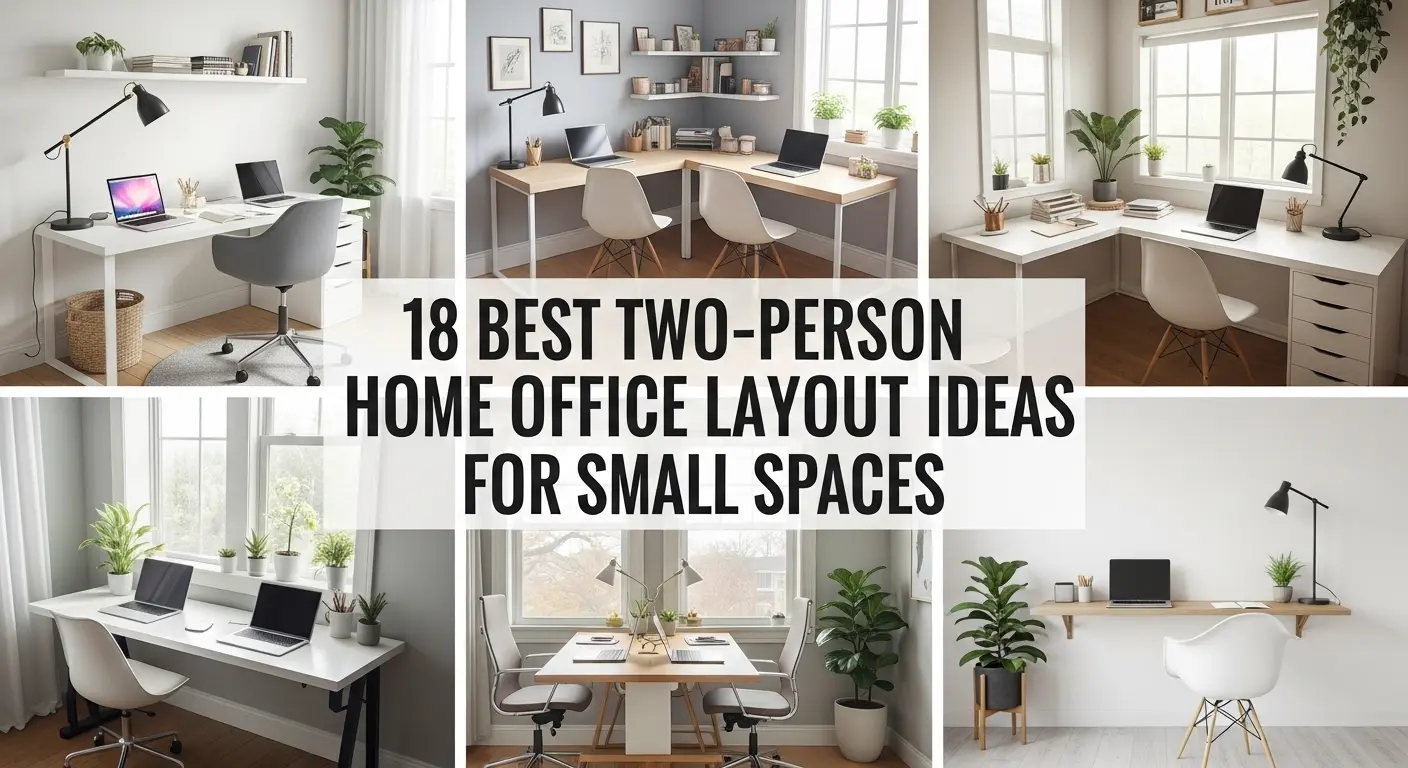
Looking for smart ways to share a workspace? Discover the 18 Best Two-Person Home Office Layout Ideas for Small Spaces with expert design tips, real-life inspiration, and space-saving solutions. Learn how to position desks, improve lighting, add storage, and create a balanced setup that supports focus and comfort for two people. Perfect for apartments, small rooms, and multi-purpose spaces, this guide helps you build a functional, stylish, and clutter-free home office that truly works.
1. Shared Wall Desk Layout
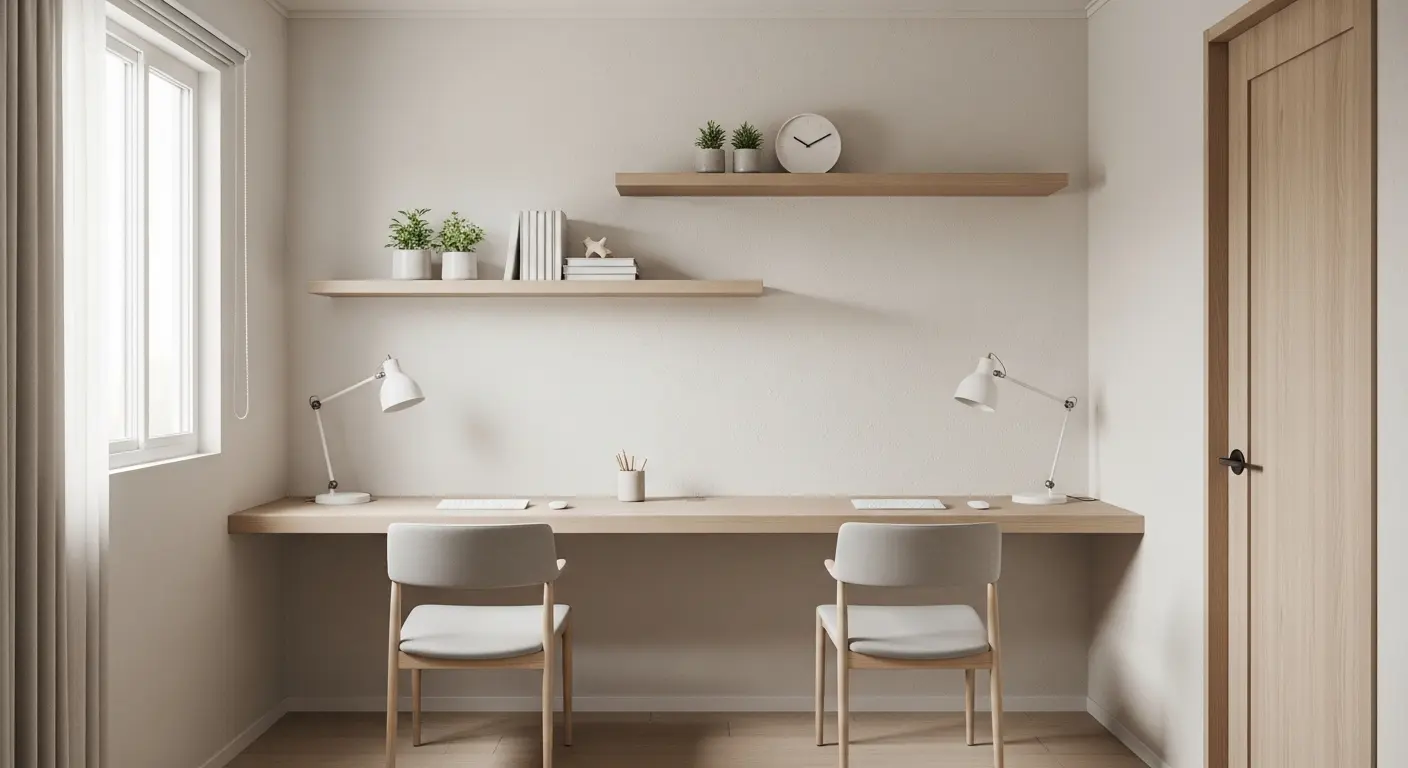
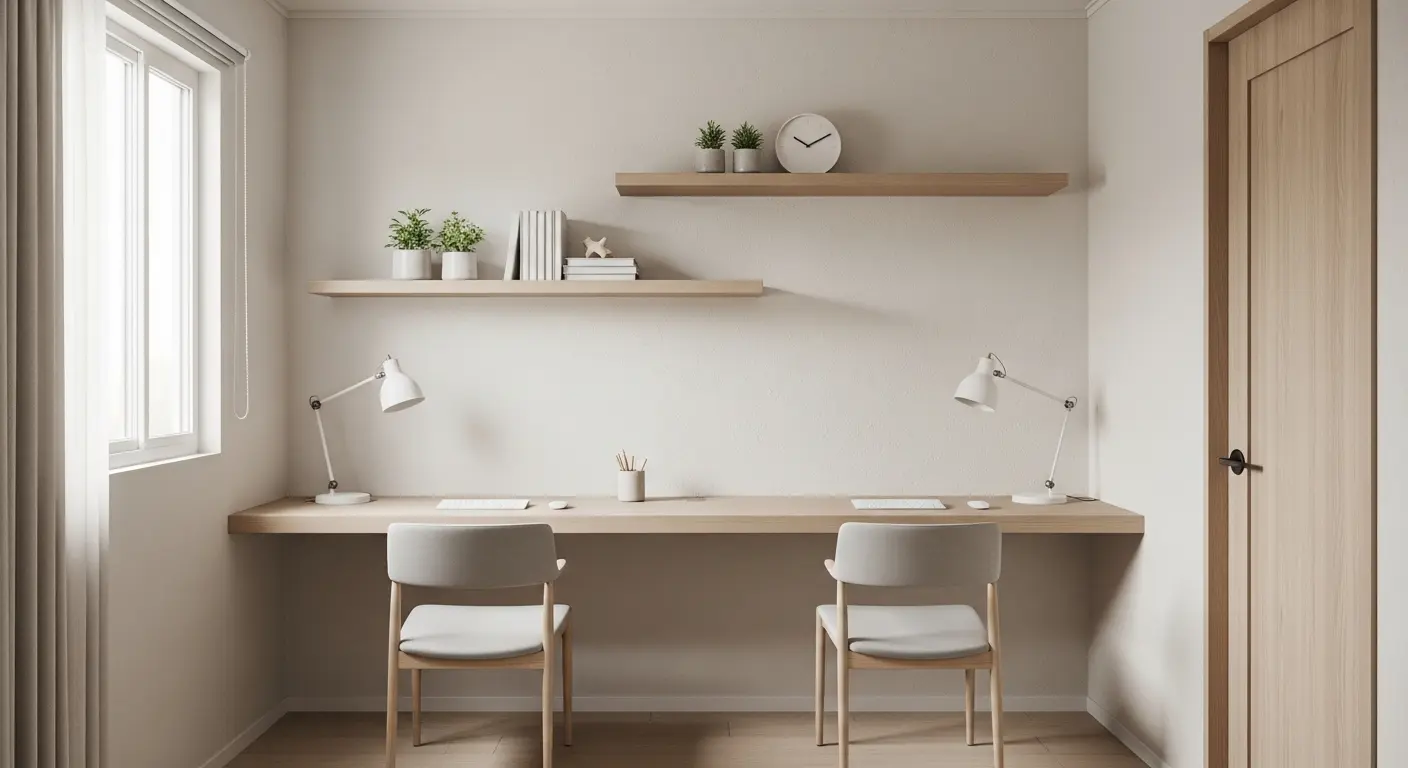
The 18 Best Two-Person Home Office Layout Ideas for Small Spaces begin with a shared wall desk that saves floor space while keeping both users aligned. This setup works well in narrow rooms where depth feels limited. A single continuous desk creates visual flow and avoids clutter. You can add floating shelves above to store daily items, keeping the surface clean and functional for both people.
This layout supports focus because both users face the same direction, reducing distractions. Choose slim chairs and hidden cable management to maintain a neat look. Soft lighting and neutral tones help the room feel open. You can personalize each side with small decor items without breaking harmony. This design feels simple, balanced, and highly efficient for daily work routines.
2. Back-to-Back Desk Setup
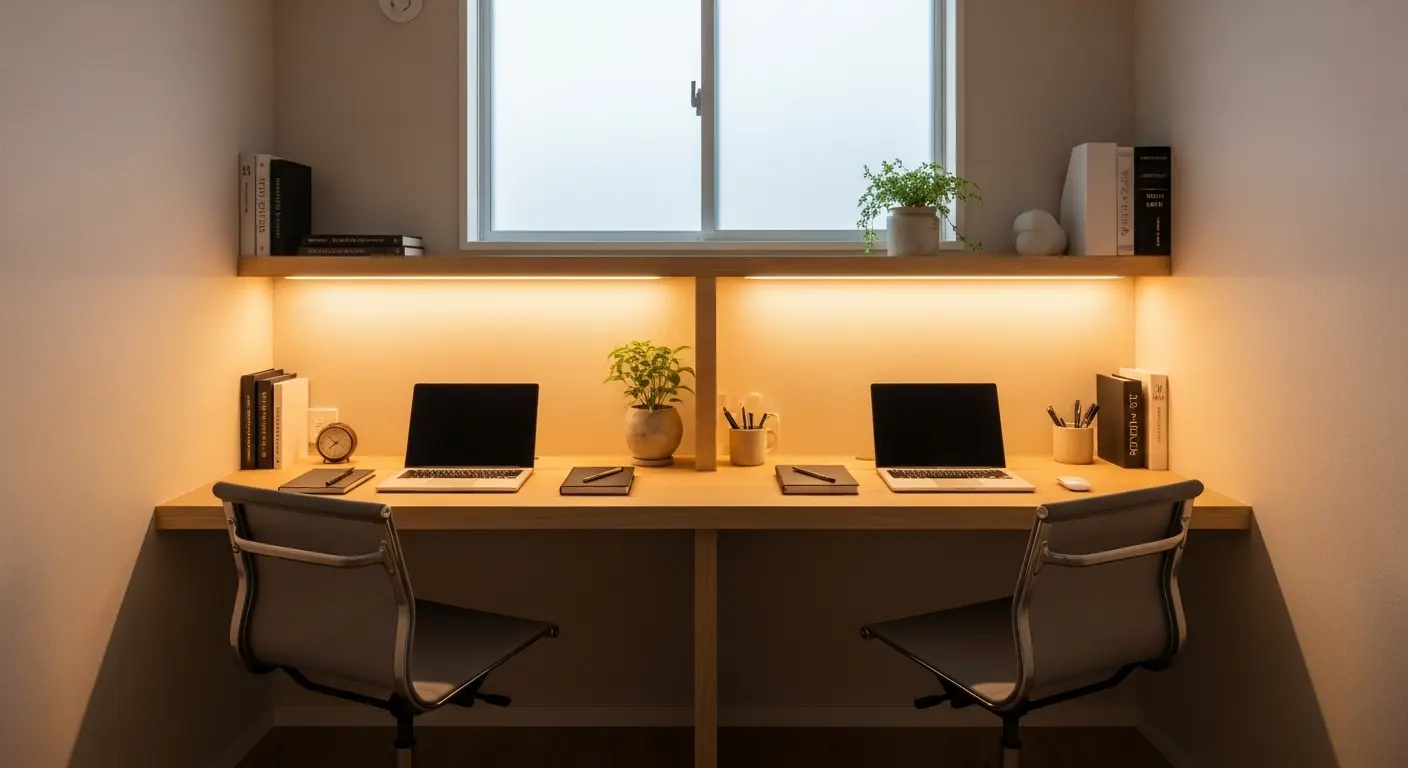
A back-to-back desk layout creates two distinct work zones within one compact space. This setup suits people who need focus and minimal interruptions. Each person gets a dedicated surface while still sharing the same area. The design also allows easy cable routing through the center, which keeps the outer edges clean and organized.
This arrangement works best in square rooms where balance matters. Add a small divider or plant between desks for a soft boundary. Use matching chairs to maintain visual unity. Lighting should cover both sides evenly to avoid shadows. This layout gives privacy without isolation, making it a strong option for shared productivity in small home offices.
3. L-Shaped Corner Office
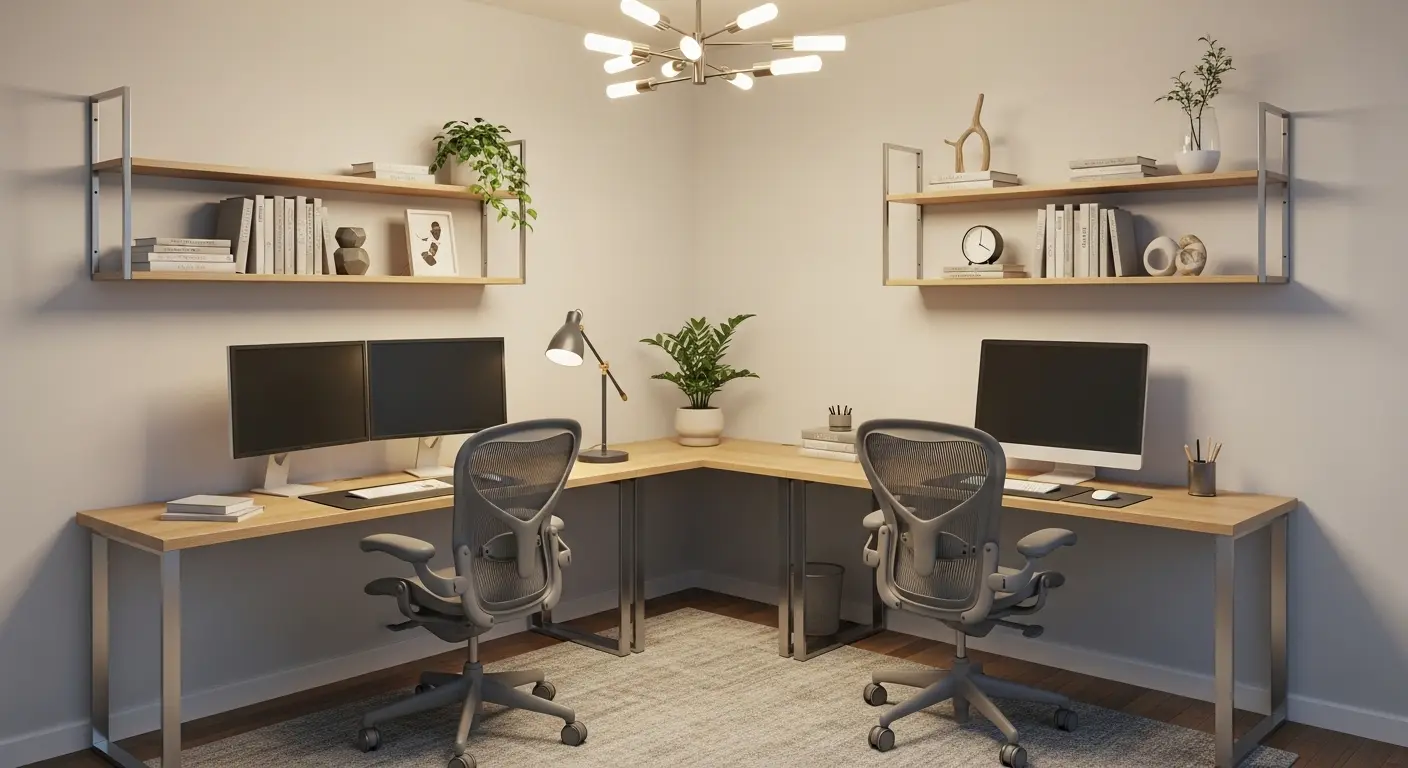
An L-shaped desk uses corner space that often goes unused. This layout allows two people to sit at different angles, which creates a natural division. It works well in tight rooms because it maximizes every inch. Each person gets enough surface area without crowding the space, making daily tasks smoother and more comfortable.
Add vertical storage above each section to keep essentials close. Keep the center corner clear to avoid visual clutter. This design helps both users stay organized without overlapping work zones. Choose light wood or white finishes to reflect light and make the room feel bigger. This layout blends comfort, efficiency, and smart use of space.
4. Opposite Wall Layout
Placing desks on opposite walls creates a strong sense of personal space. This layout works well in narrow rooms where width limits design choices. Each person faces away from the other, which reduces distractions and supports deep focus. It also allows for different work styles without interference.
Use matching furniture to maintain a cohesive look. Keep the center pathway clear for easy movement. Add wall shelves above each desk to expand storage without crowding the floor. This setup feels calm and balanced while giving both users full control over their workspace. It works best for people who value quiet and independence.
5. Window-Facing Dual Desk
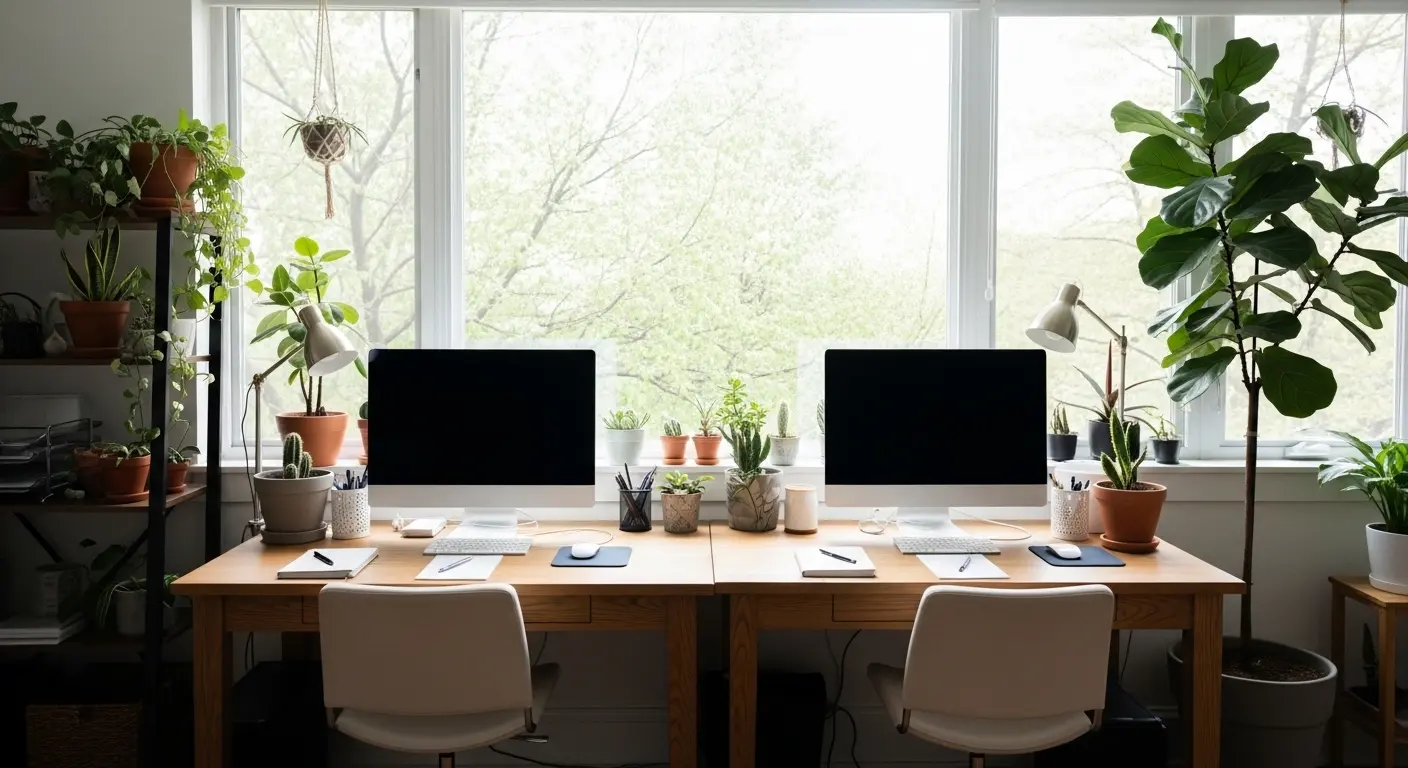
A window-facing layout brings natural light into the workspace, which improves mood and productivity. Placing two desks side by side allows both users to enjoy the view while working. This design works well in small rooms where natural light becomes a key feature.
Use sheer curtains to soften sunlight and reduce glare on screens. Add small plants to enhance the fresh atmosphere. Keep the desk design simple to avoid blocking light flow. This layout feels open and uplifting, making long work hours more enjoyable. It creates a positive environment that supports both focus and comfort.
6. Floating Desk Design
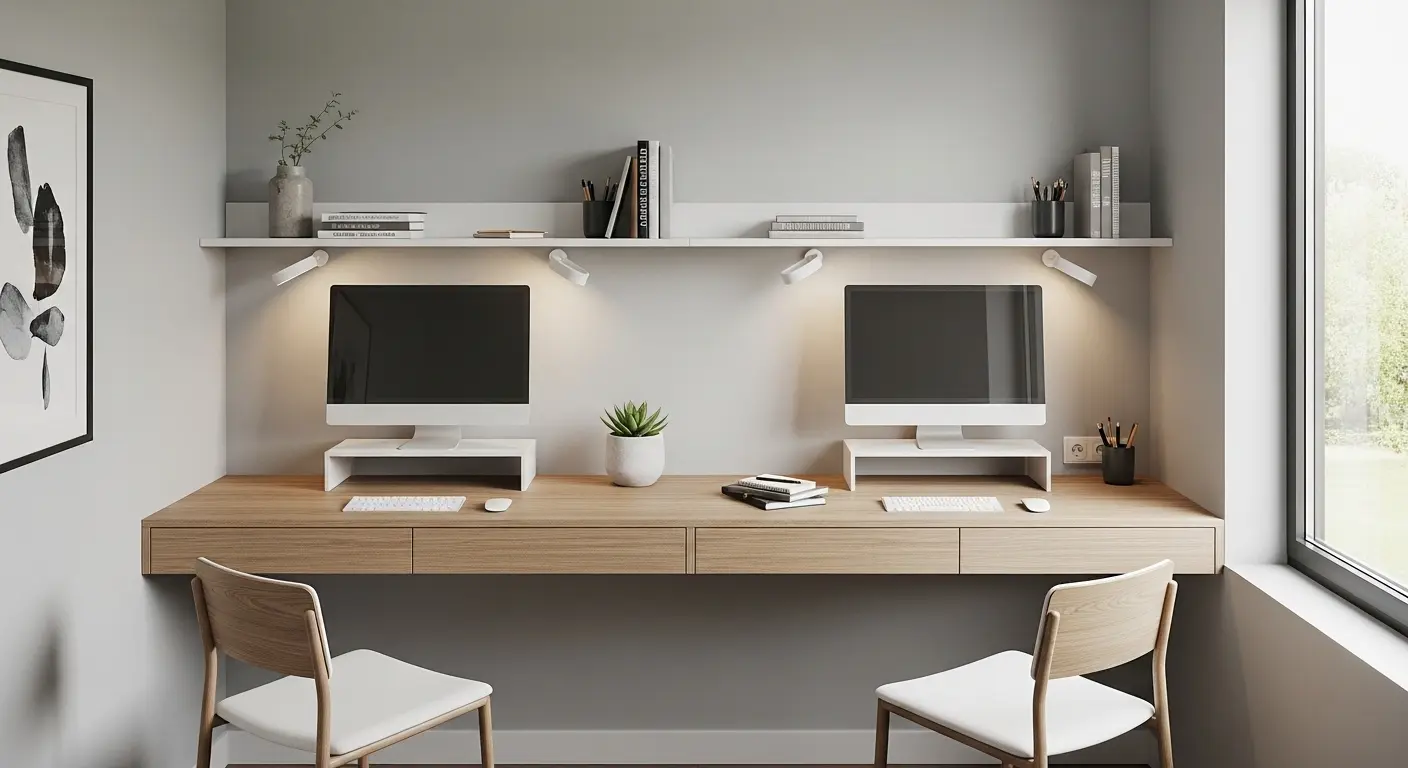
A floating desk removes bulky furniture and opens up floor space. This layout works well in very small rooms where every inch matters. Mounting a long desk on the wall creates a sleek and modern look. It also allows you to customize height and spacing based on your needs.
Pair it with lightweight chairs and wall storage to keep everything accessible. This design keeps the room airy and uncluttered. It suits people who prefer a clean and minimal environment. The simplicity of this layout makes it both stylish and practical for shared workspaces.
7. Closet Office Conversion
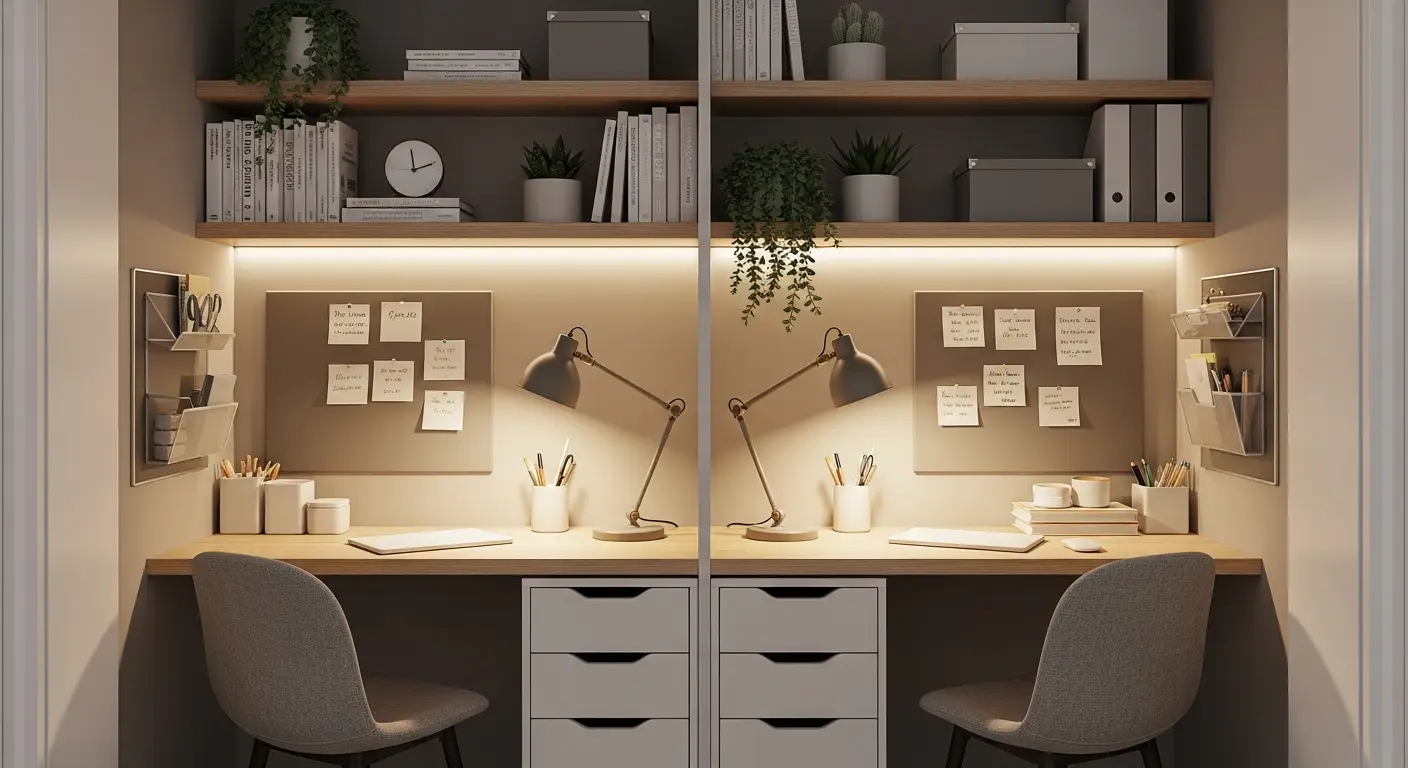
Turning a closet into a shared office creates a hidden and efficient workspace. Remove the doors and install a custom desk that fits the width. This layout works well in homes where space feels limited. It transforms an unused area into a productive zone for two people.
Add shelves above for storage and use soft lighting to brighten the space. Keep the color palette light to avoid a cramped feel. This setup feels cozy yet functional. It provides a dedicated work area without taking over the main room.
8. Foldable Desk Setup
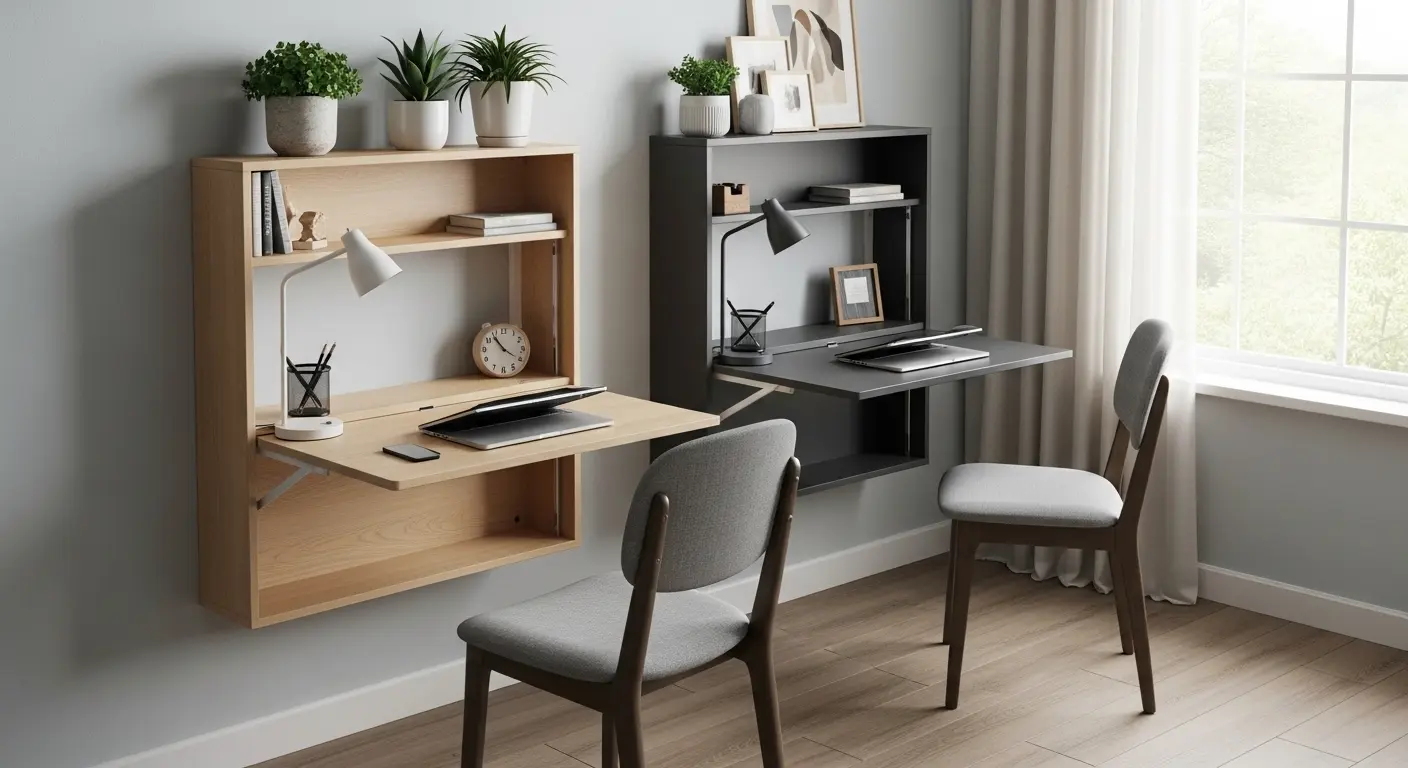
Foldable desks offer flexibility in tight spaces. You can fold them away when not in use, freeing up room for other activities. This layout works best in multi-purpose rooms where space must adapt throughout the day.
Choose sturdy designs that support daily use. Add wall organizers to store essentials. This setup keeps the room versatile and clutter-free. It suits people who need a workspace that does not dominate the entire area.
9. Parallel Desk Layout
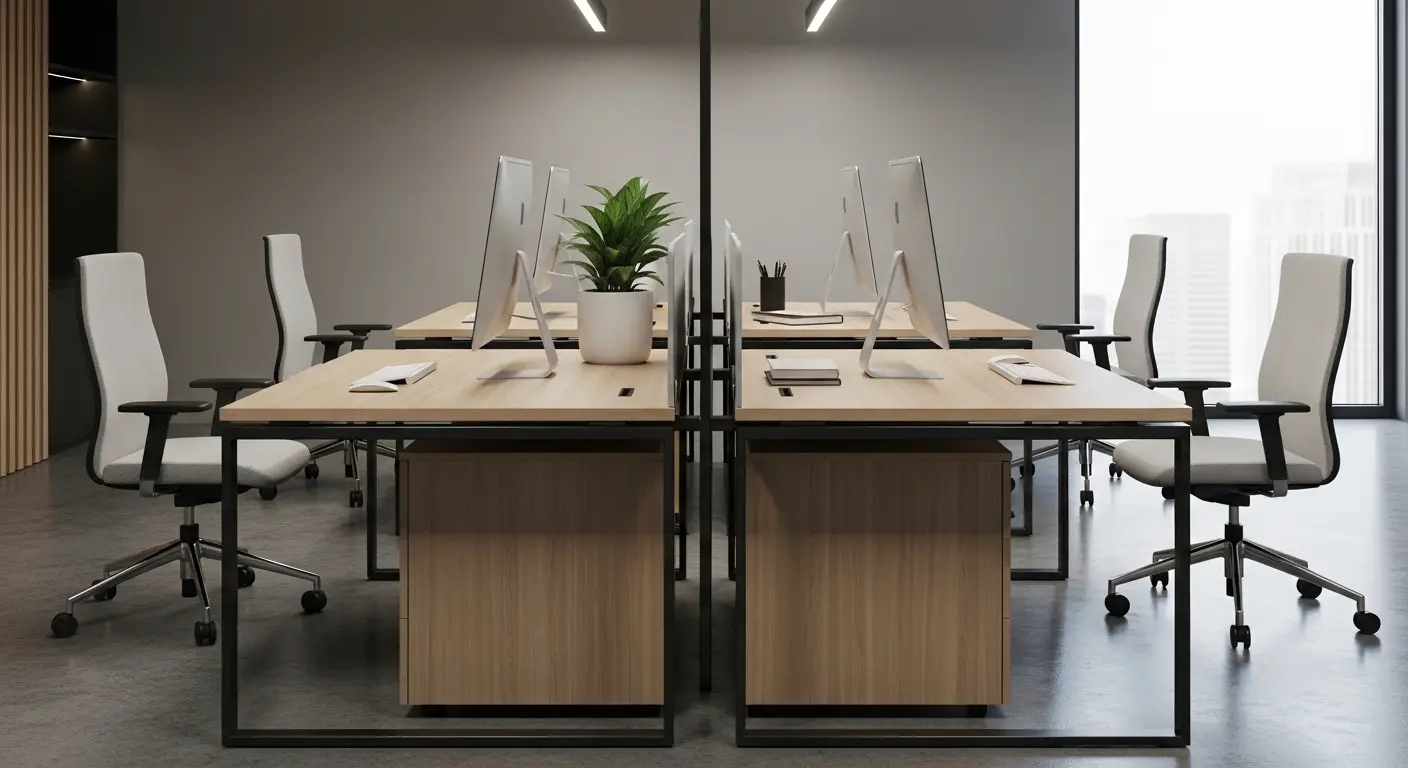
Parallel desks create a balanced and organized layout. Both users sit facing the same direction with a walkway in between. This setup works well in rectangular rooms. It allows easy movement while keeping both workstations accessible.
Use slim desks to maintain space efficiency. Add shared storage at the end of the layout. This design keeps everything within reach while maintaining order. It offers a structured and practical solution for shared workspaces.
10. Built-In Desk Wall
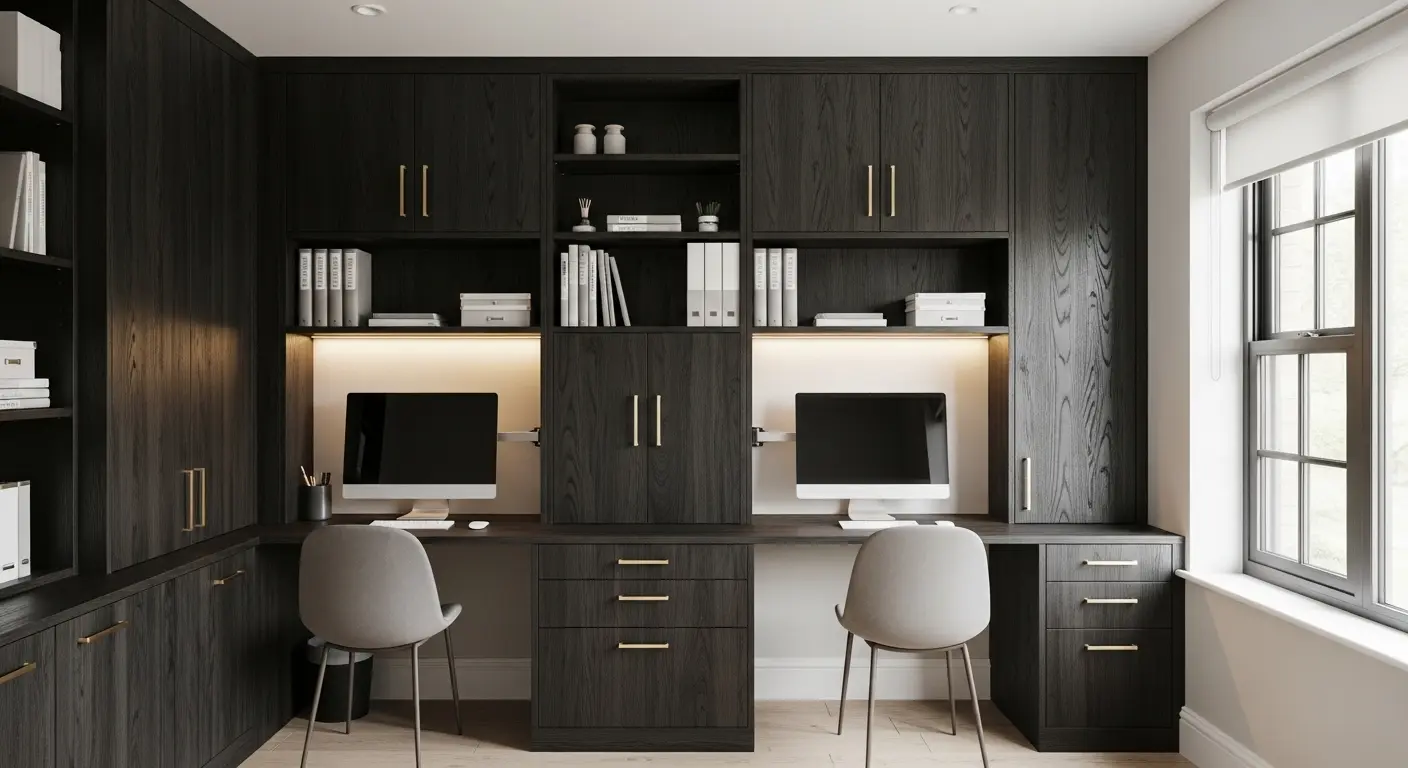
A built-in desk creates a seamless and polished look. It uses the full wall for storage and workspace. This layout works well for long-term setups where durability matters.
Add cabinets above and below for storage. Keep the design simple to avoid overwhelming the space. This setup feels organized and permanent, making it ideal for consistent daily use.
11. Compact Booth Style
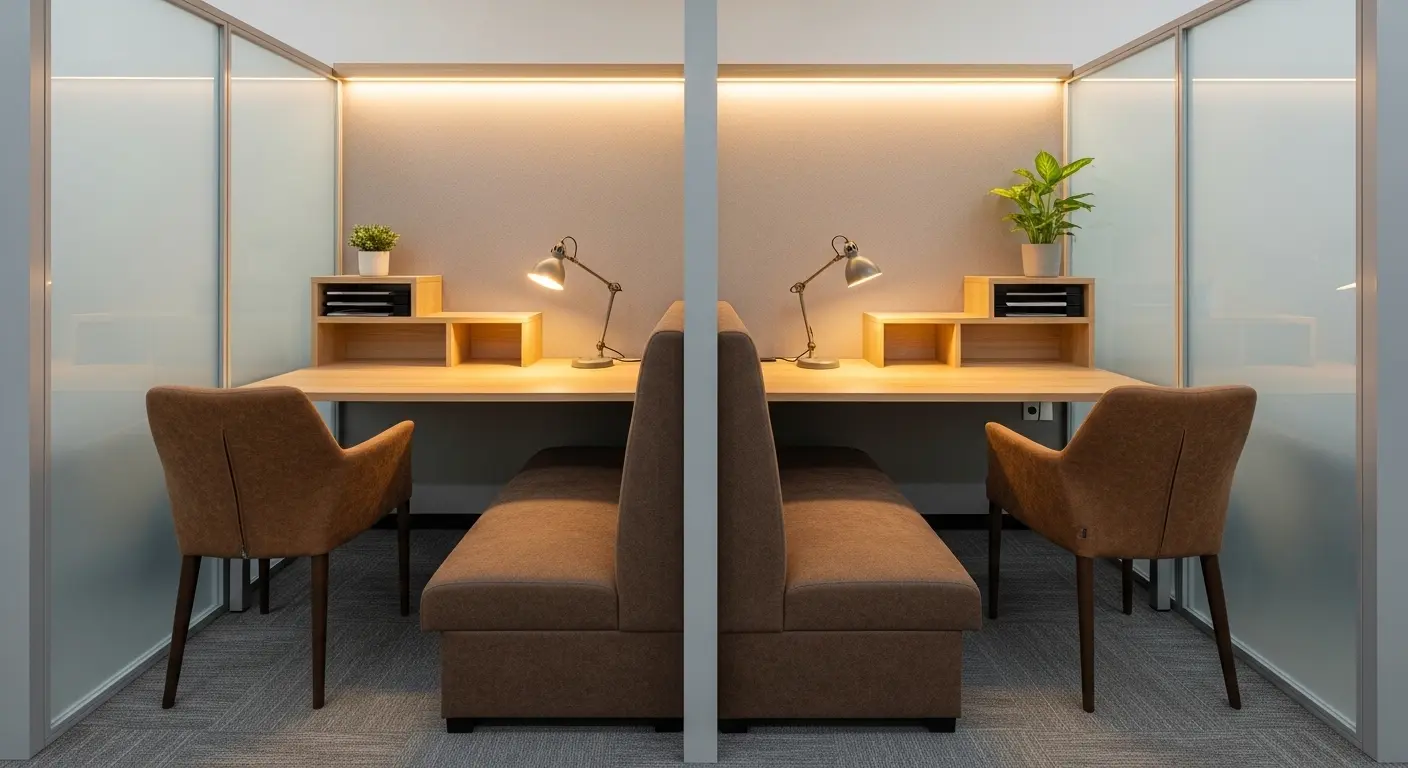
A booth-style layout creates a cozy and focused environment. It places two desks facing each other with a shared divider. This design works well in small corners or alcoves.
Use soft materials and warm lighting to enhance comfort. This setup feels intimate yet functional. It supports collaboration while maintaining personal space.
12. Minimalist Dual Desk
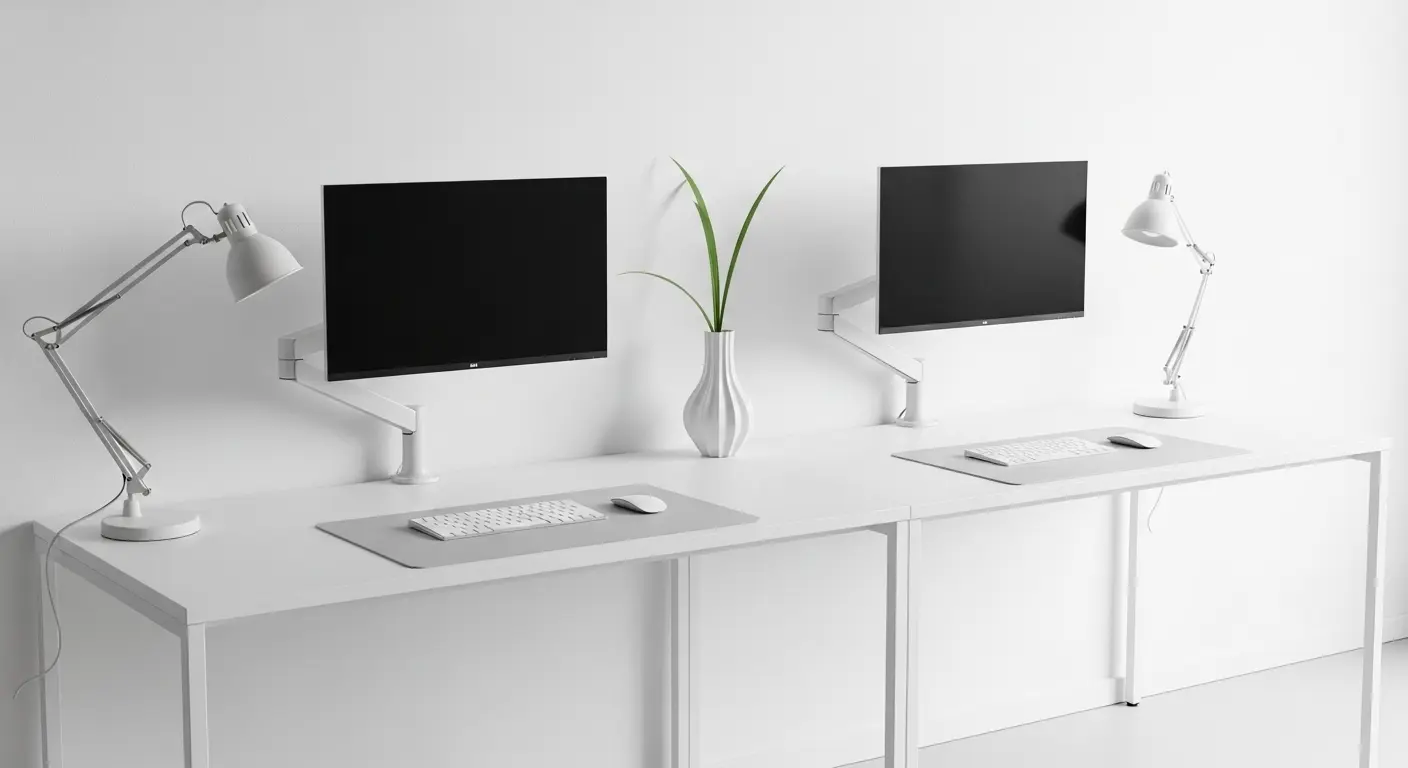
A minimalist layout removes distractions and keeps only essentials. This design works well in small spaces where clutter can quickly build up.
Choose simple furniture and neutral colors. Keep surfaces clear and organized. This setup feels calm and efficient, helping both users stay focused.
13. Industrial Style Layout
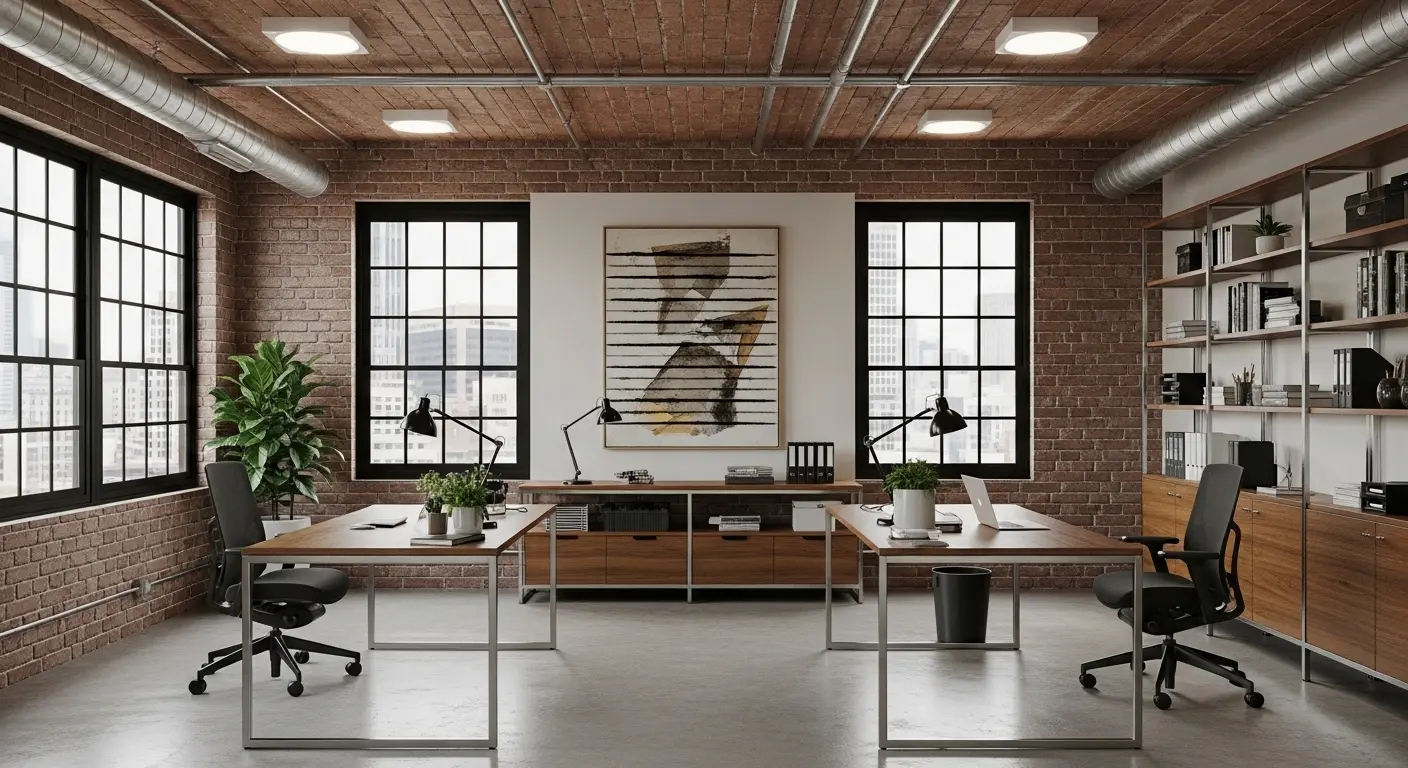
An industrial layout adds character to a small office. It uses raw materials like metal and wood to create a bold look.
Keep the design balanced to avoid a heavy feel. Add warm lighting to soften the space. This setup feels stylish and unique while remaining functional.
14. Scandinavian Dual Workspace
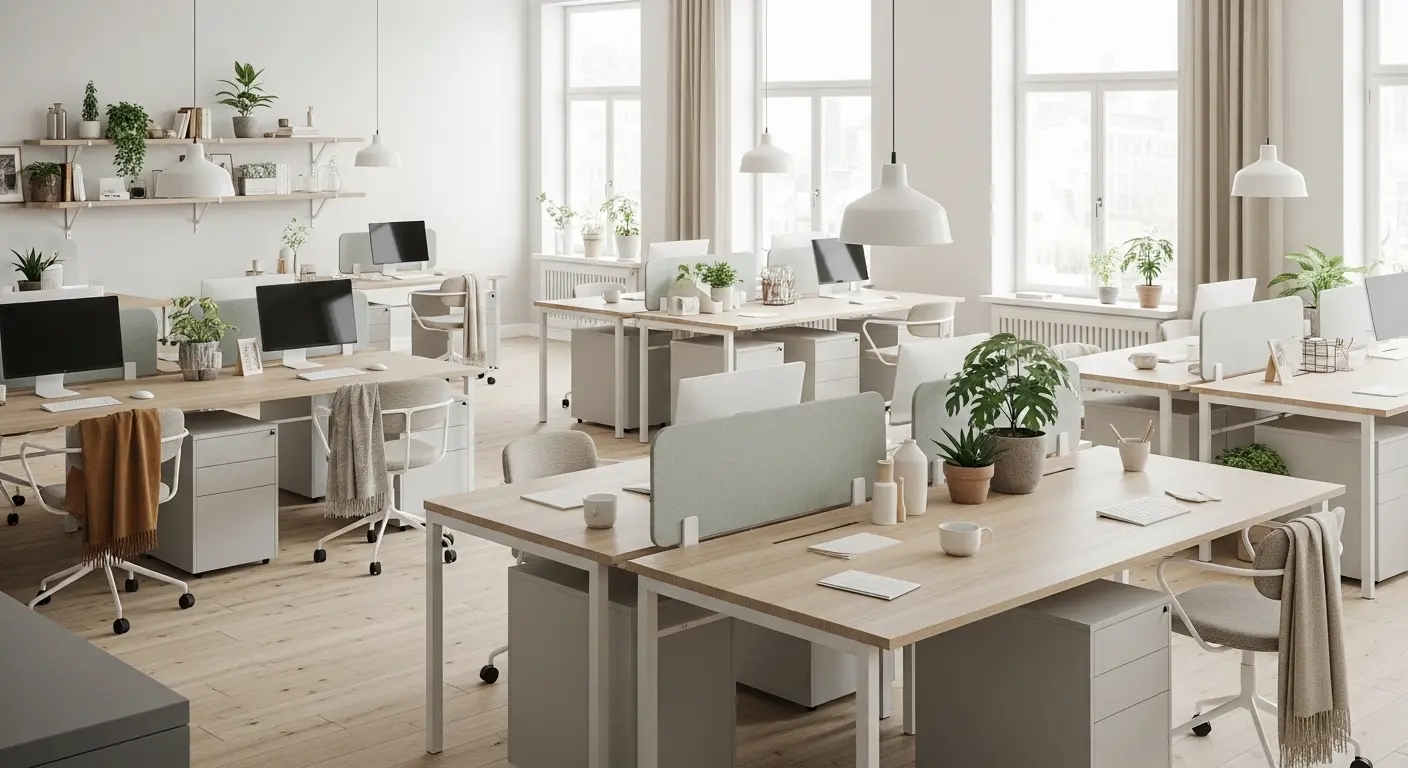
A Scandinavian layout focuses on simplicity and comfort. It uses light colors and natural materials to create a bright space.
Add soft textures and clean lines. This setup feels calm and inviting, making it ideal for long work hours.
15. Under-Stair Office
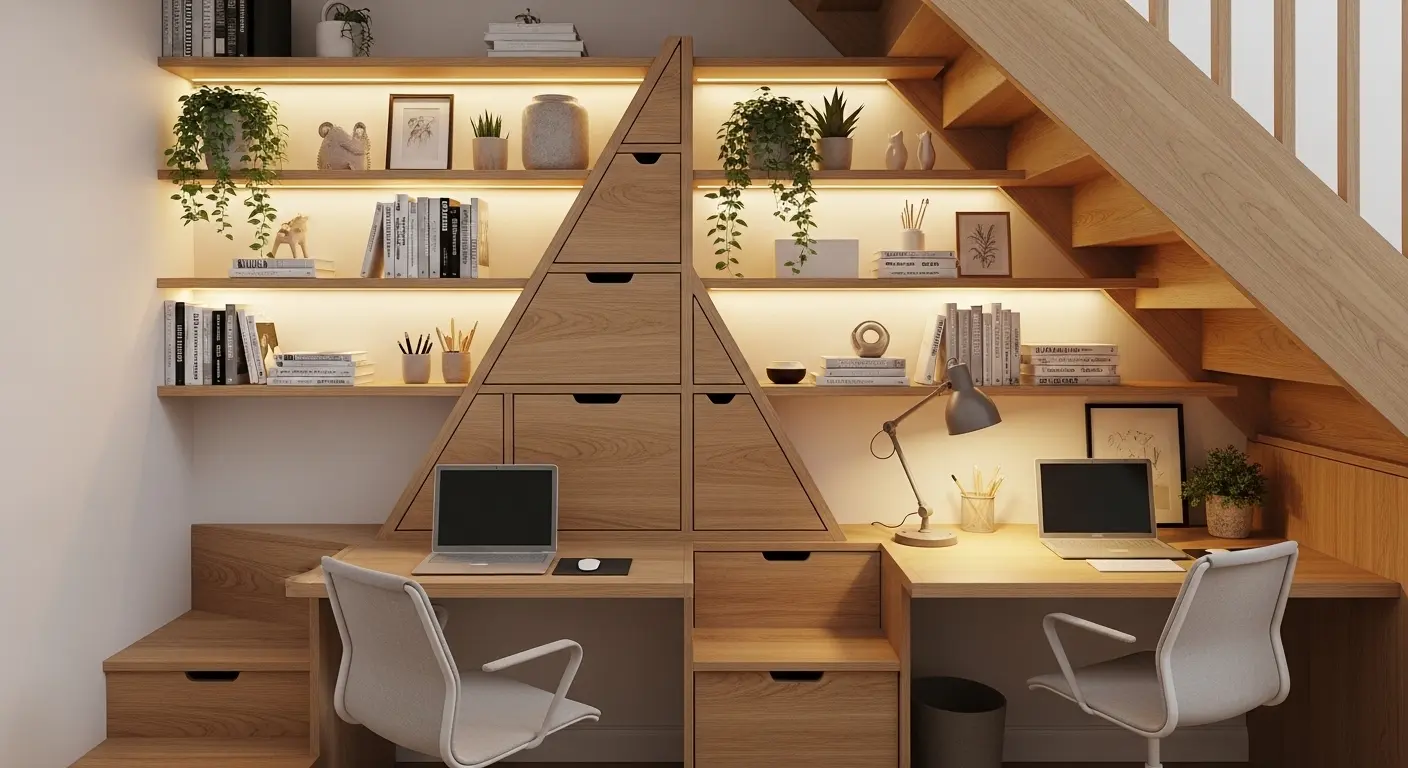
Using space under stairs creates a smart and compact office. This layout turns an overlooked area into a functional workspace.
Keep the design simple and well-lit. This setup maximizes unused space while maintaining comfort and efficiency.
16. Dual Laptop Station
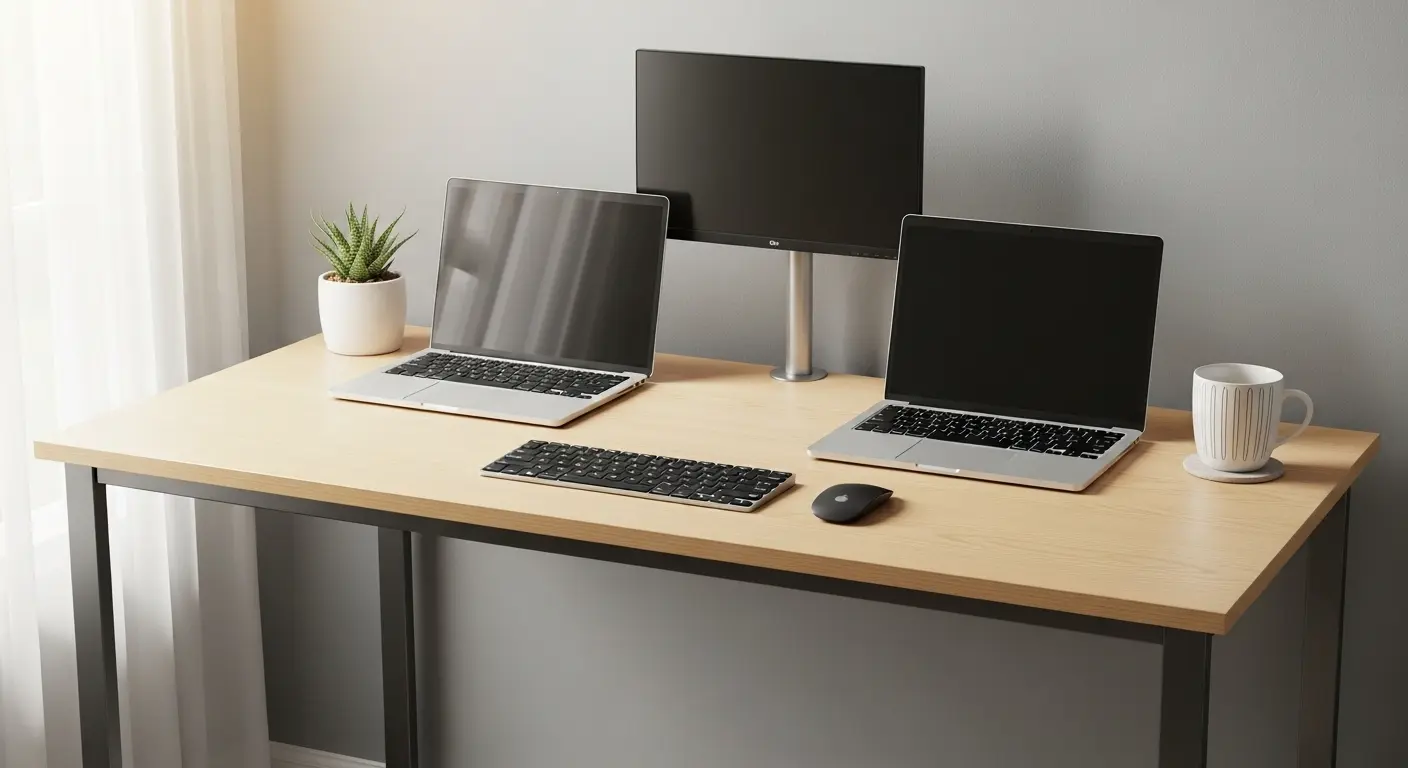
A dual laptop station works well for light tasks. It uses a small desk while still supporting two users.
Keep accessories minimal to avoid clutter. This setup feels simple and efficient for everyday work needs.
17. Glass Desk Layout
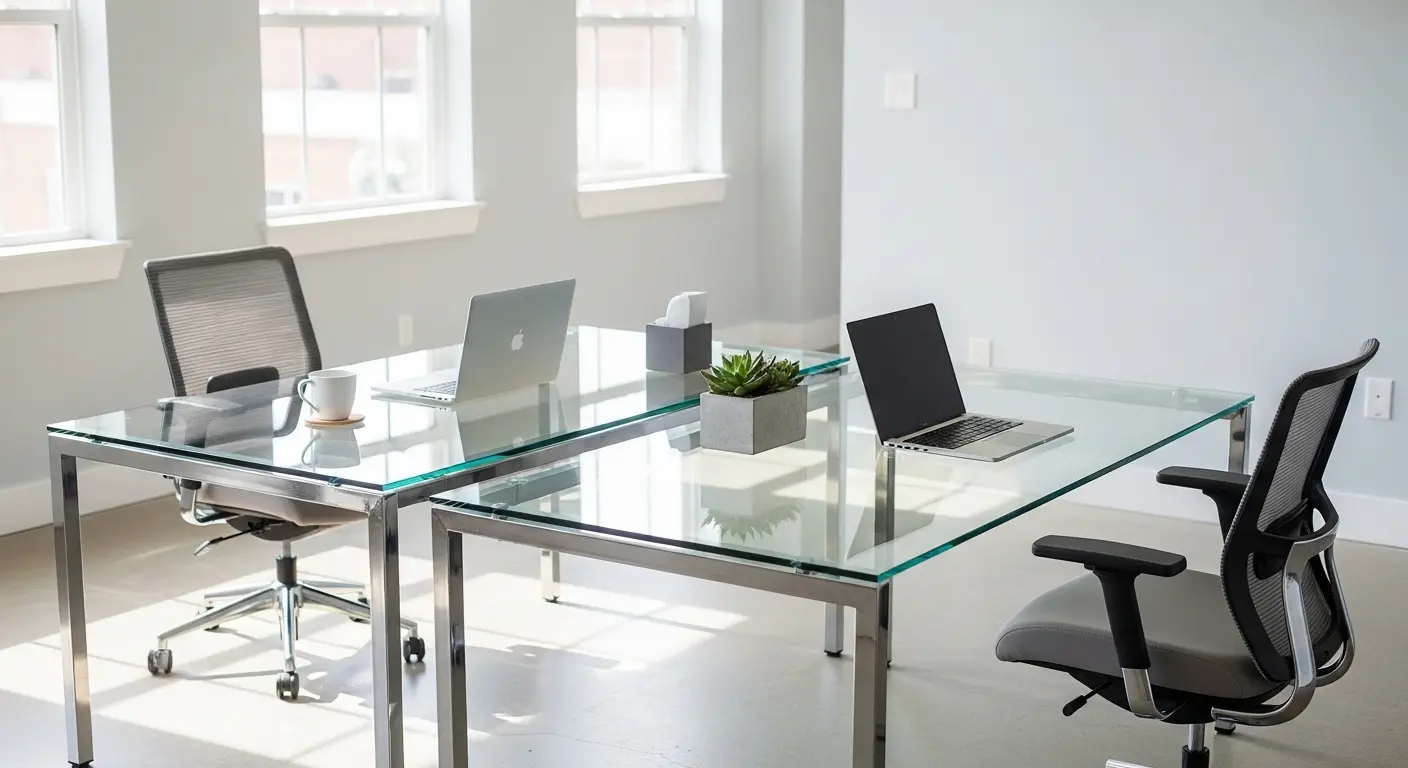
Glass desks create an open and airy look. They reflect light and make the room feel larger.Pair them with simple chairs and minimal decor. This setup feels modern and spacious, even in tight areas.
18. Multi-Level Desk Design
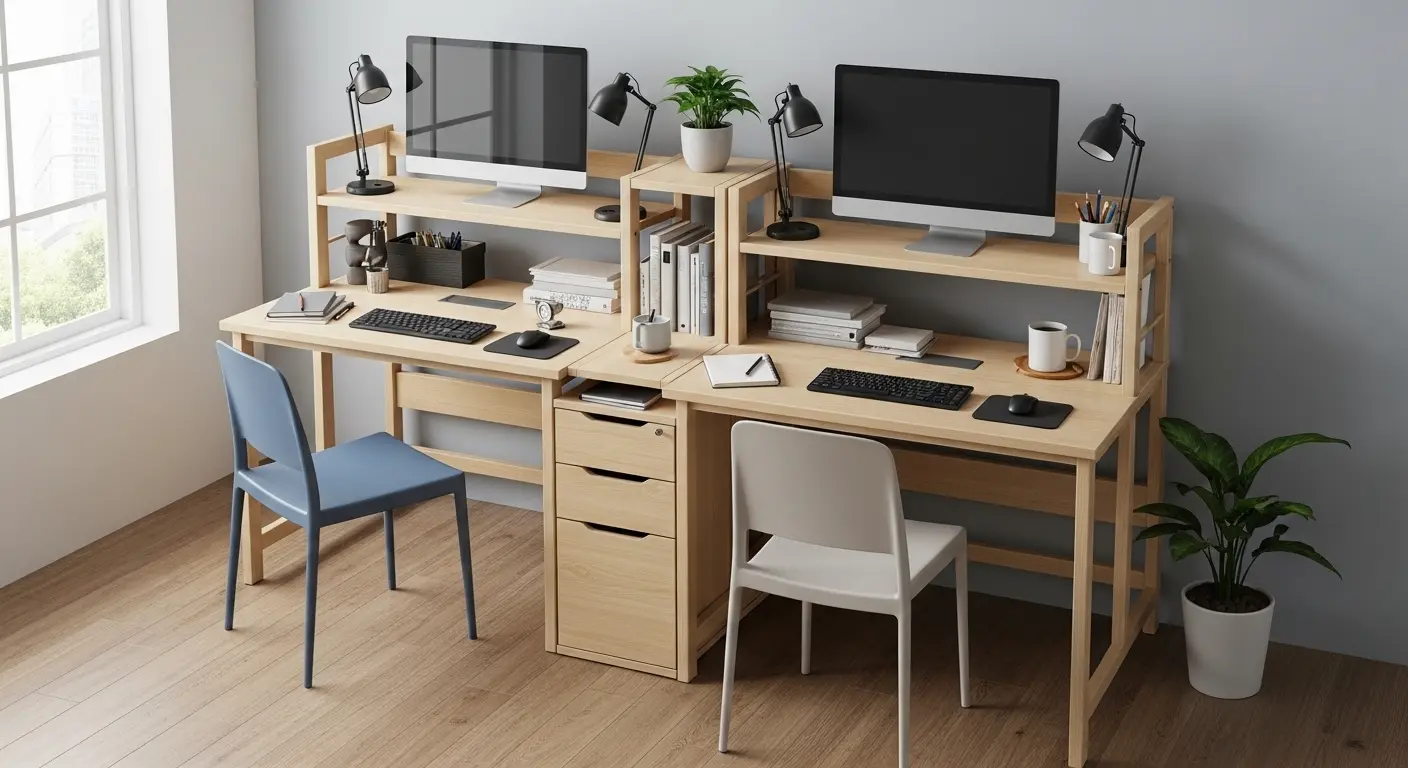
A multi-level desk adds depth to a small space. It creates separate zones within one structure.Use different heights for tasks and storage. This setup keeps everything organized while maximizing space.
Conclusion
Designing a shared workspace in a small area requires smart planning and creative thinking. These ideas show how different layouts can transform limited space into a productive and comfortable environment. Each option offers a unique way to balance function and style while supporting two users.
Choose a layout that fits your room shape, work habits, and storage needs. Focus on simplicity, organization, and comfort. A well-designed home office not only improves productivity but also creates a space where both users can work with ease and clarity every day.